
Case Study
The Early Intervention Investment Framework
Background
The Victoria Government in Australia is facing significant challenges to meet the growing demand for social services. Services such as social housing and homelessness support, health care and mental health services, and child protection and family services are all struggling to keep up with demand in a fiscally constrained environment [1] [2] [3] [4].
The Victorian government is not alone in this. Many governments find themselves stuck in a pattern of constantly requiring more funding for crisis-end services. It highlights the need for better prevention to address problems before they get worse. This can enhance the long-term wellbeing of people - by providing timely support before problems escalate - and reduce the strain on overburdened service systems.
Currently, most governments allocate only a very small fraction of spending to prevention activities compared to acute services. This is what the Victoria Government’s Early Intervention Investment Framework is seeking to rebalance, with inspiring results!
What is the Early Intervention Investment Framework?
The Victoria Government’s Early Intervention Investment Framework (EIIF) builds on the government budget process to encourage the uptake of early intervention at a larger and wider scale [6]. The Framework has several innovative components, including:
a ten-year time horizon for estimating outcomes and avoided costs to the government from implementing early intervention programmes. Such avoided costs have rarely been systematically quantified as part of the budget process - neither in Victoria nor elsewhere - but are now both quantified and published in budget papers;
evidence-based mechanisms to invest in programmes that work and to quickly disinvest from those that do not;
sharing avoided costs across government departments to acknowledge the inherent connections across the social services; and
systematic integration into the annual state budget process.

Centring lived experience in solutions
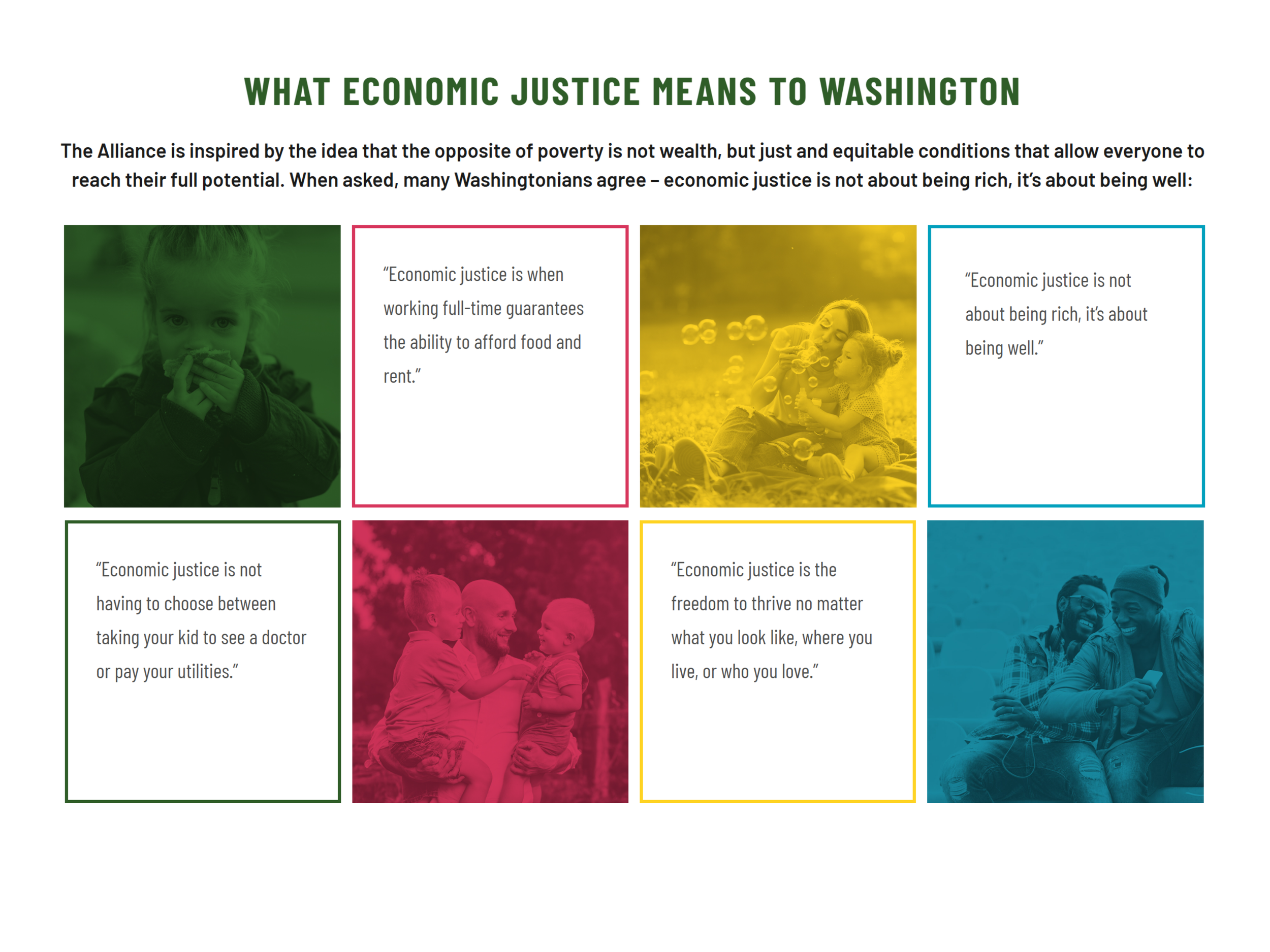
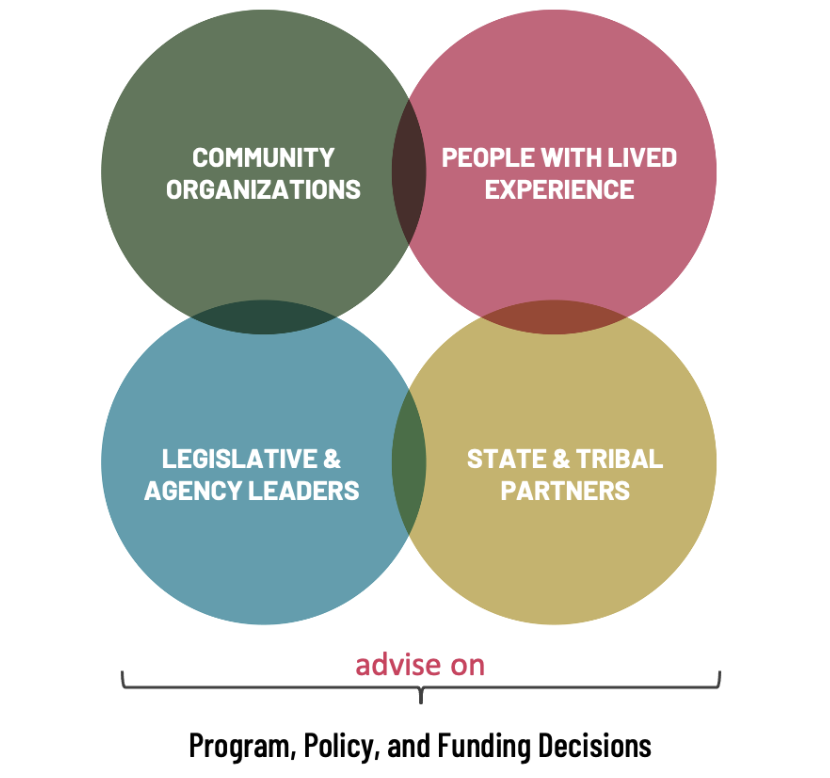
Over two years, the PRWG — including 70 members from state offices, tribes, community organisations, philanthropy, and individuals experiencing poverty — held monthly meetings across Washington. Since past efforts to reduce poverty had fallen short, how could they make this effort different? They recognised that the narrative and stereotype of people experiencing poverty as lazy or undeserving was fundamentally flawed. Instead, a new narrative was needed that honoured the wisdom, strength, and resilience of those living in poverty [1].

The PRWG recognised the need to empower the experts who are best positioned to propose effective solutions: individuals experiencing poverty. They established a Steering Committee of people and communities historically excluded from economic wellbeing. The Steering Committee set the priorities for the strategic plan, pushed the PRWG to strive for excellence, and approved the final version before sending it off to the Governor. The result was a plan that described how dismantling poverty requires addressing the root causes of structural racism, historical trauma, and systemic inequality and that people experiencing poverty must lead the way to inform the changes needed to build a just and equitable future [2] [3].
A long-term plan to dismantle poverty
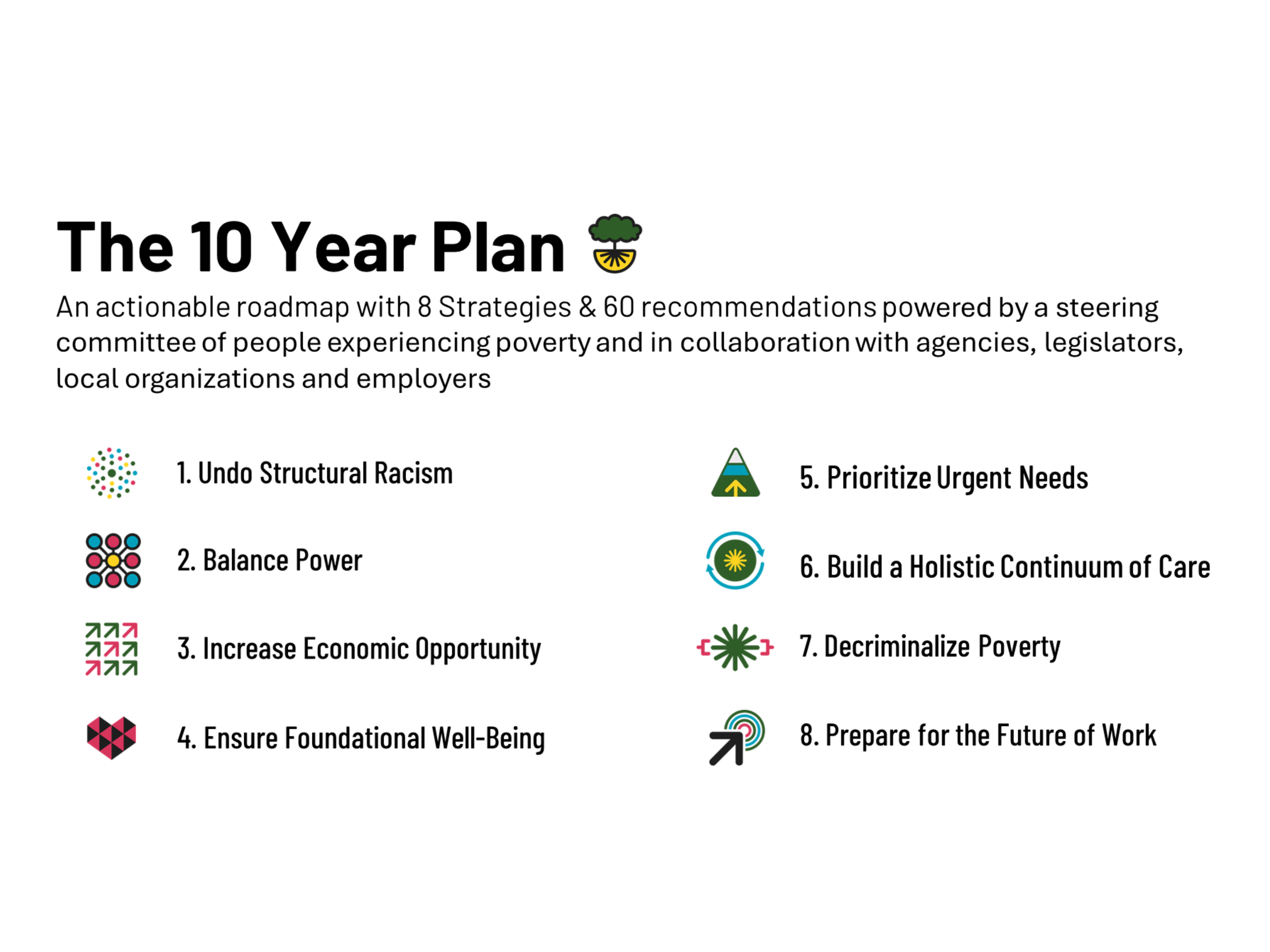
The 10-Year Plan to Dismantle Poverty in Washington lays out eight overarching strategies accompanied by 60 specific recommendations. Strategies 1 and 2 form the foundation of the plan, centring the expertise of people experiencing poverty and addressing and dismantling institutionalised racism, oppression, and historical trauma within state policies, programmes, and funding decisions. Building on this foundation, strategies 3 through 8 aim to: 1) mitigate the cascading effects of poverty on children, adults, and families, guiding them towards economic stability; and 2) prevent poverty from occurring in the first place by investing in the necessary opportunities for all Washingtonians to achieve social and economic mobility [3].
Once the 10-year plan was developed, the PRWG realised it would take substantial coordination to:
Lay a strong foundation for the plan by working with experts with experience in implementation and co-creating solutions.
Maximise the value of existing systems with stronger policy integration and collaboration across systems, sectors, and jurisdictions.
Build new systems by modernising policies and programmes and making bold systemic and cultural changes.
Following submission of the 10-Year Plan to the Governor, Executive Order 21-05 was issued (a statutory pathway for action), forming an executive subcabinet of state agencies responsible for implementation. Given the significant partnership, research, and communication needed to enable the plan to lift off, a new model of working together was needed and the Economic Justice Alliance was born.
The Washington Economic Justice Alliance coordinates the implementation of the state’s 10-Year Plan to Dismantle Poverty. The Alliance brings all of the groups involved in co-creating and implementing the 10-Year Plan under one umbrella.
Emergence of the Economic Justice Alliance
In the first three years, Alliance partners took 270 actions to implement the 10-Year Plan, with cross-system impacts in health and human services, employment and training, tax policy, higher education, childcare and more. As Lindsay Morgan Tracy, Innovator-in-Chief for the Washington Economic Justice Alliance, housed within the Department of Social and Health Services in Washington State, describes: the role of the core coordination team is to be the connective tissue between all of the partners and stakeholders involved and to coordinate and track activities that are aligned with and/or inspired by the 10-Year Plan.
Funding for initiatives comes from a mix of sources depending on the initiative. Some of these efforts have leveraged public/private funding from philanthropy or corporate social responsibility models. Other efforts have been funded by state or federal budgets. As much as possible, the aim is to pass financial resources through to the community to enable them to lead on the work that needs to be done.


Examples of actions that have been taken include [4]:
-
Tax credits are powerful tools to prevent poverty and allow hard-working Washingtonians to benefit from the state’s economic activity. The Working Families Tax Credit passed in 2022, boosting the incomes of 162,000 households across Washington state in its first year. In 2023, each of those households received a share of the $115 million in refunds issued – reaching 234,000 children statewide. It is estimated that upwards of 350,000 households may qualify annually for the credit.
-
The Integrated Eligibility and Enrollment Modernization Program is a multi-organisation, multi-year collaboration to transform how Washington residents access health and human services statewide. Aligned with Strategies 5 and 6 of the 10-Year Plan, the IE&E Modernization Program simplifies the application and eligibility process for multiple programmes, streamlining access to benefits for 3 million Washingtonians who receive services from Health and Human Services (HHS) agencies each year.
-
People experiencing poverty often face a range of barriers to getting services that would help them achieve economic stability, including not having a valid ID or driver’s license. People with lower incomes are less likely to have a bank account, be able to fill out employment paperwork, or apply for state benefits. Recognising a gap in services for Washingtonians unable to reach their local Department of Licensing office, the Legislature funded DOL2Go – a mobile unit that travels across Washington to meet people where they are and get them the identification they need. DOL2Go’s first success story in reaching underserved communities was at Camp Hope in Spokane, where their work in partnership with other government and community services supported nearly 600 people to transition out of homelessness and into permanent shelter, resulting in the camp closing in June 2023.
-
The Department of Health, in collaboration with healthcare professionals, local produce growers, and other partners, is committed to increasing access to fruits and vegetables. Washington moved from check-based redemption for the Women Infants and Children (WIC) Farmer’s Market Nutrition Program to electronic benefits, making benefit redemption easier for both participants and growers. In 2025, WIC participants can also shop at authorized Farmer’s Markets and farm stores. The initiative has had promising results:
WIC and Fruit and Vegetable Incentive Program (FVIP) participants redeem more of their food benefits
Access to fresh, locally-grown fruits and vegetables is increased
Programme participants can engage directly with farmers in their community
-
Aligned with Strategies 1, 2, 6, and 8 in the 10-Year Plan, Economic Security for All (EcSA) is a comprehensive poverty reduction program. It holistically provides each participant with a career plan, a caring coach, coordinated wraparound support service from multiple programs, up to $1000 per month incentive payments to stay on track with the career plan, and automatic income eligibility for the full Washington College Grant. EcSA is now state law, and by 2025, it has already moved over 1,600 Washingtonians from poverty to economic stability, with incomes averaging over $49,000 per year.
-
Strategies 6 and 8 in the 10-Year Plan recommended increasing direct cash to keep people from experiencing poverty and stabilising the economic floor for Washingtonians in an increasingly uncertain labour market. Two Alliance partners are leading direct cash pilots in Washington state.
-
Strategy 3 in the 10-Year Plan notes that homeownership remains the predominant path for wealth building in the United States, but racial discrimination throughout history unjustly prevented BIPOC communities from becoming homeowners, leading to large disparities in homeownership and wealth between people of colour and white people. A 2022 report by the Homeownership Disparities Work Group, chaired by the Department of Commerce, recommended targeted investments to improve homeownership among BIPOC Washingtonians. Thanks to the support of community leaders, advocates, and legislators, the Legislature immediately responded with a new funding source that will generate $70-$100 million annually to create the Covenant Homeownership Program, which will make an estimated 27,000 BIPOC Washingtonians eligible for down payment and closing cost assistance.
-
Aligned with strategies 1, 2, 3, 7, and 8 in the 10-Year Plan, the Community Reinvestment Project is a community-designed plan to uplift communities disproportionately harmed by the historical design and enforcement of criminal laws and penalties for drug possession. The goal is to create lasting economic benefits, build wealth, and ensure everyone has a fair chance at success. CRP is expected to generate up to $1.6 billion in economic benefits for targeted communities over the next decade. This includes creating jobs in partnership with diverse small businesses, offering training programs to meet workforce needs, higher self-sufficient incomes for people to support their families, helping people acquire assets like homes and new businesses, and increasing the safety of neighbourhoods through community-led projects.
-
Aligned with Strategy 2, a coalition-based initiative called Just Futures made up of organisations working to impact communities most affected by environmental and economic challenges, has worked to co-create solutions in partnership with state and local governments. Starting with a public-private partnership for three years, this effort turned into a $2 million dollar line item in the state budget to implement community assemblies, Washington’s version of the citizen assembly model. This model works with frontline communities to co-create solutions instead of using the sortition model. The aim is to make public programmes and investments more effective, build community self-determination, and create a healthier democracy [6].
For more in-depth stories and programme details, visit the Washington Economic Justice Alliance’s website [2].
Impacts
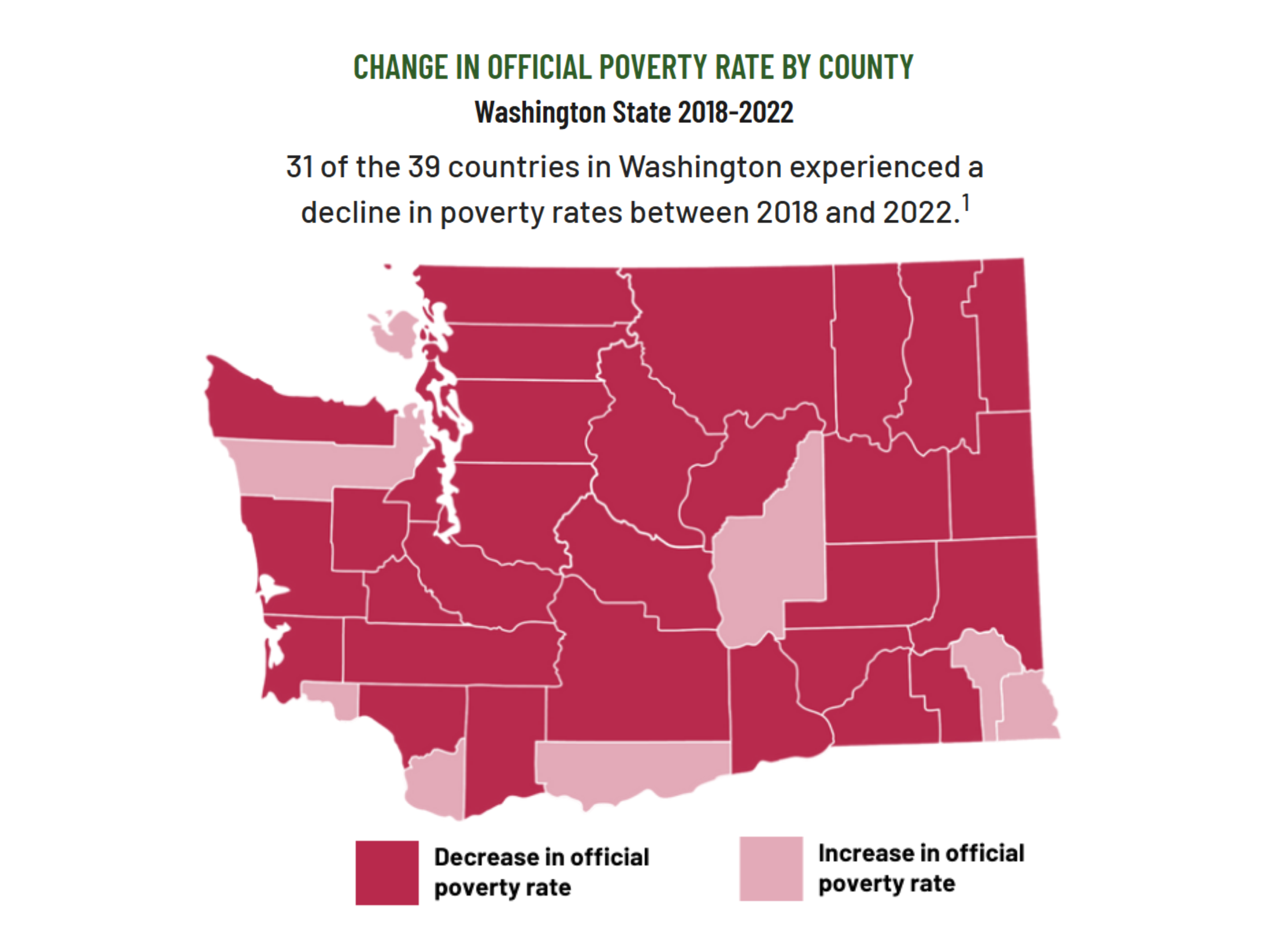
The 2024 impact report of the Washington Economic Justice Alliance shows that progress to reduce poverty is possible when a critical mass of people with diverse expertise and power align to achieve shared goals: preventing poverty, improving access to services, and promoting economic stability, mobility and wealth building. The 270 actions that have collectively been taken by the Alliance partners are starting to bear fruit. Trends show accelerated progress toward closing gaps in economic wellbeing among Indigenous, Black and Brown Washingtonians, children and rural communities [4].
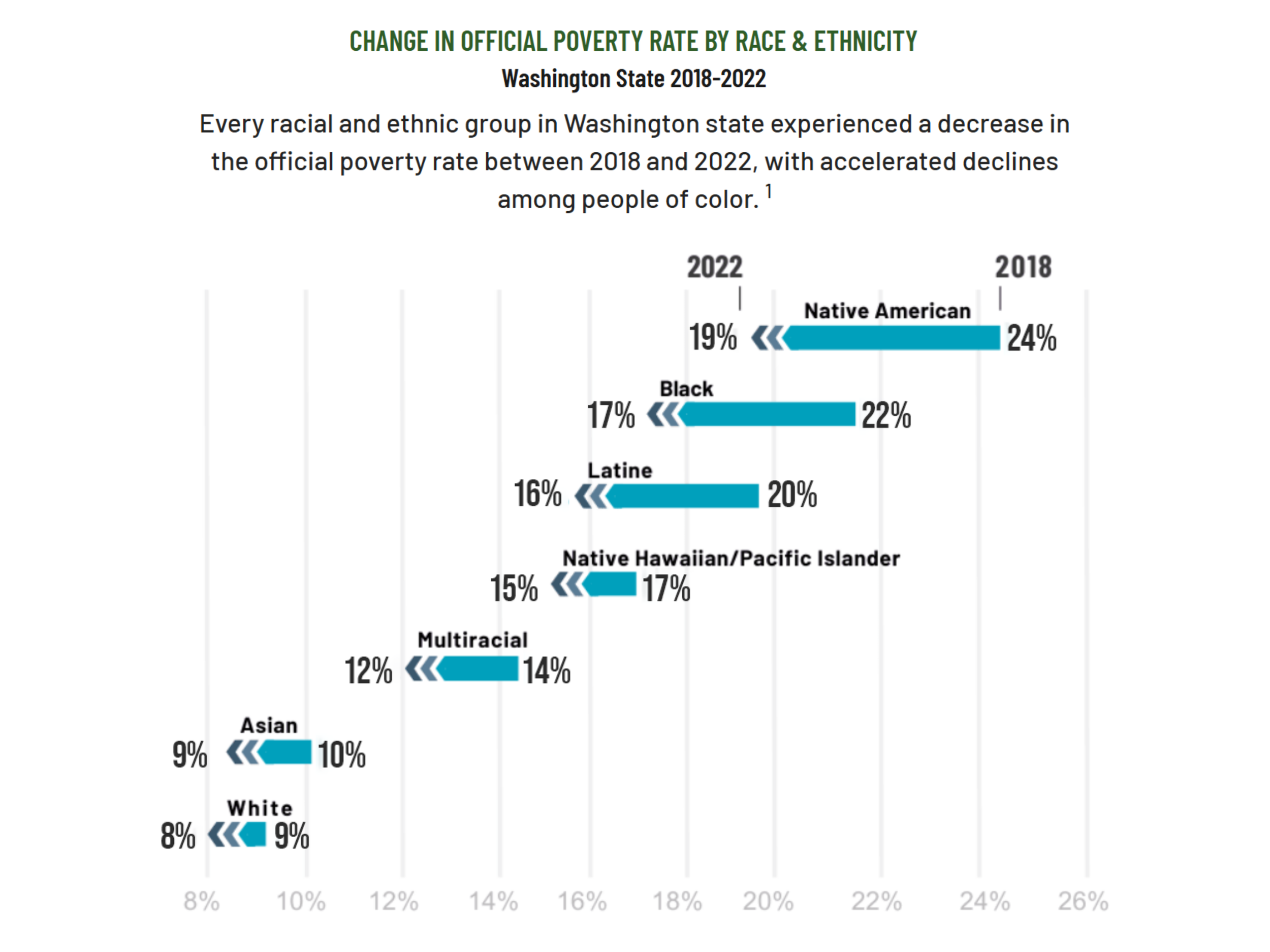
An online Action Tracker shows the stages that the different actions are in.
Overcoming challenges and next steps
The Washington Economic Justice Alliance offers the following pieces of advice for other practitioners worldwide working on eradicating poverty [5]:
Align to a clear, unifying, bold north star. The gravitational pull of the status quo is strong. To succeed, anti-poverty efforts must align to bold goals that generate momentum for change.
Invest in the relational to be transformational. Deep, trusting relationships are necessary to weather the transactional nature of policy and programme change. Investing adequate time to create a culture of trust, genuine listening and meaningful conversations is necessary for systemic, equitable change to occur.
Combine data and research with stories. Humanising the work is critical. Building on evidence from multiple sources, especially real-life stories from people living on a poverty income, results in more effective solutions and measurable impact.
Embrace feedback: Every sector and institution working to end poverty has a past and present that can be improved upon for the future. Constructive criticism is a gift that repairs harm within communities, builds trust between institutions, and helps address root causes.
Accept that failure is necessary for success. Complex issues like poverty reduction require experimenting with a range of different approaches to find what works. If programmes aren’t producing desired results, rethink the approach and try again.
Be resilient: Commit to the long-term and don’t be discouraged by naysayers. Addressing poverty and inequality is challenging but necessary work that may take a generation or more to accomplish. Just because the work is hard, doesn’t mean it is impossible.
Look for the joy. Systemic change is hard, messy and beautiful work. The day-to-day is a grind, but there is so much joy working collaboratively and in deep relationship with one another.
"Reducing poverty and building wellbeing for all is possible when we are intentional about partnerships and policy choices. No one organisation can do it alone - it has to be radically collaborative and aligned in mission and action to make progress."
— Lori Pfingst, Executive Director, Washington Economic Justice Alliance
Washington state is proving that reducing poverty and intentionally building economic wellbeing is possible, but efforts remain a work in progress. The north star of economic wellbeing for all will remain, but strategies may shift to adjust to the pace of political and technological change and shifting social and economic conditions. As the Economic Justice Alliance looks to the future, they see radical collaboration, inclusive narratives, and community-led public-private partnerships being essential to achieving their long-term vision for Washington to be a state where everyone experiences joy, belonging and wellbeing, now and for generations to come.
Washington state’s poverty reduction efforts and the 10-Year Plan have been featured as a national best practice by the Aspen Institute, Harvard’s Leadership for a Networked World, and the American Public Human Services Association [4].
References
[1] Australian Council of Social Service (2022). Helping people in need during a cost-of-living crisis: Findings from the Australian Community Sector Survey, https://www.acoss.org.au/helping-people-in-need-during-a-cost-of-living-crisis-findings-from-the-australian-community-sector-survey/
[2] The Mirage, 10 Jan 2025, Victoria Sees Surge in Social Housing Demand, www.miragenews.com/victoria-sees-surge-in-social-housing-demand-1388750/
[3] The Royal New Zealand and Australian College of Psychiatrists, 7 May 2024, Severe workforce shortages threatening mental healthcare in Victoria
[4] Commission for Children and Young People (2019), In our own words, https://ccyp.vic.gov.au/assets/Publications-inquiries/CCYP-In-Our-Own-Words.pdf
[5] Gmeinder, M., D. Morgan and M. Mueller (2017), “How much do OECD countries spend on prevention?”, OECD Health Working Papers, No. 101, OECD Publishing, Paris, https://doi.org/10.1787/f19e803c-en.
[6] DTF (2022). The Early Intervention Investment framework: A considered and collaborative approach to support early intervention investment. Victorian Government Department of Treasury and Finance, https://www.dtf.vic.gov.au/sites/default/files/2024-10/Early-Intervention-Investment-Framework-A-considered-and-collaborative-approach-FINAL-PDF.PDF
[7] ANZSOG (2022). Implementing the Early Intervention Investment Framework: A Report to the Victorian Department of Treasury and Finance, Australia and New Zealand School of Government, https://anzsog.edu.au/app/uploads/2022/09/ANZSOG-report-on-implementating-of-the-Early-Intervention-Investment-Framework-RI-Cover.pdf
[8] Gaukroger, C. (2025). Budgeting for Wellbeing. International Approaches. Carnegie UK, https://carnegieuk.org/publication/budgeting-for-wellbeing-international-approaches/
[9] Ibid.
Image and table sources
Figure 1: Victorian Department of Treasury and Finance (2024). EIIF presentation and toolkit for OECD Wellbeing Forum 2024, downloadable from www.dtf.vic.gov.au/early-intervention-investment-framework
Table 1: Victorian Department of Treasury and Finance (2022). The Early Intervention Investment framework: A considered and collaborative approach to support early intervention investment.
Figure 2: Victorian Department of Treasury and Finance (2024). EIIF presentation and toolkit for OECD Wellbeing Forum 2024, downloadable from www.dtf.vic.gov.au/early-intervention-investment-framework
Figure 3: Victorian Department of Treasury and Finance (2022). The Early Intervention Investment framework: A considered and collaborative approach to support early intervention investment. Notes: Compiled based on classifying service delivery initiatives in Victoria State Budget Paper No. 3 Chapter 1 from years 2015-16 to 2022-23 where EIIF years are 2021-22 and 2022-23. It covers service delivery initiatives in Education, Families and Child Protection, Health, Housing and Justice portfolios as well as the Aboriginal Affairs, Mental Health and Wellbeing, Family Violence Services, Ice Action Plan, and Targeting Youth Offending Whole of Government Packages. It excludes COVID-19 funding.