
Case Study
Planet Happiness in Nepal
Using wellbeing data to co-create an inclusive, sustainable tourism strategy for Nepal’s Everest Region
Travel and tourism is one of the world’s largest industries affecting change almost everywhere, employing approximately 10% of the global workforce. Yet, one of its biggest weaknesses is that it routinely prioritises business and government interests over the needs and concerns of host communities. It typically fails to consider host community wellbeing.
To overcome this systemic weakness, the Khumbu Pasang Lhama Rural Municipality (KPLRM) in Nepal’s Everest Region worked with Planet Happiness to put host-community wellbeing at the centre of their tourism strategy development, ensuring more inclusive, responsible and purposeful tourism planning.
Using the Planet Happiness survey, which is based on Bhutan's pioneering approach to measure Gross National Happiness, Planet Happiness worked with KPLRM in 2022 and 2025 to measure the wellbeing of municipal residents. The survey covers 12 domains contributing to wellbeing, including questions on tourism, community and social support, the environment, life-long learning, arts and culture, psychological wellbeing, government, health, standard of living, the economy, work and work-life balance, and overall life satisfaction.
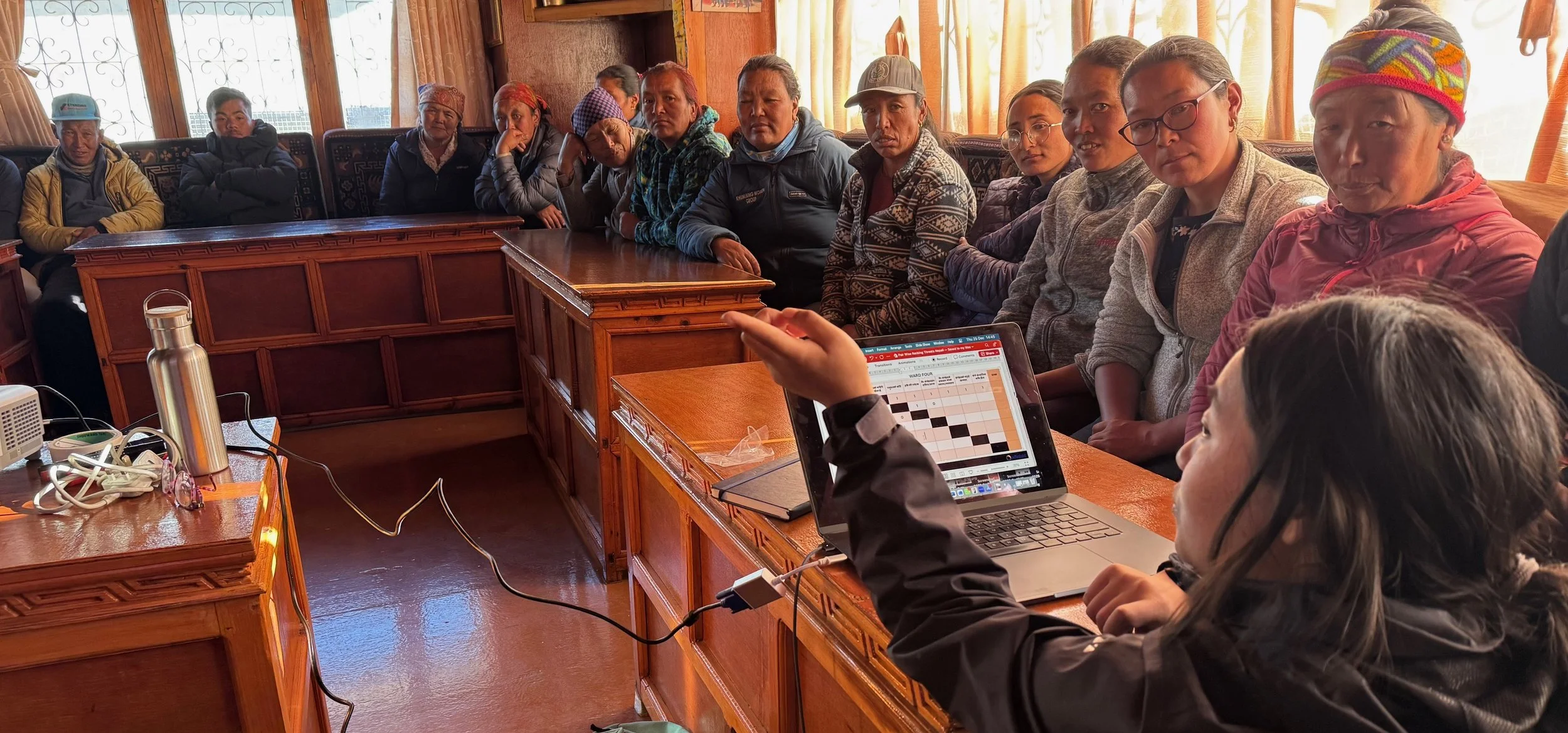
The survey data underpinned the design of an AI-enabled destination wellbeing dashboard and was shared back with residents during municipal workshops and town hall meetings across five administrative wards that make up the KPLRM. The process continues to spark conversations about individual, household and host community wellbeing and how tourism can be developed to demonstrably improve quality of life, now and for future generations.
The Happiness Index
During these meetings, residents were invited to verify and contextualise the survey findings through their own local knowledge and lived experience. Some of the threats to community wellbeing that surfaced in the survey and community meetings included concerns about climate change, the outmigration of sherpas, threats to language and traditions, non-Sherpas owning land and the loss of livestock inside the national park.
Focus group conversations about wellbeing domains with low ratings invited residents to identify deeper issues, rank concerns and prioritise threats to their wellbeing, before proposing policies, actions and interventions to develop tourism in ways that will improve their wellbeing.
Outputs of the community consultations are feeding into a new Municipal Tourism Plan, which will be released in the second half of 2026, providing a foundation for the future wellbeing of this tourism-dependent community and UNESCO World Heritage site. Use of the Planet Happiness survey enabled a greater number of residents to feed into the strategy’s formulation, through the survey itself as well as through the follow-up community-consultations, ensuring a stronger policy focus on household and host community wellbeing and the way this is influenced by tourism.
It is intended that the Happiness Index will be used annually to keep track of the strategy’s implementation and update the wellbeing dashboard, which will be used for wider KPLRM planning purposes beyond tourism. In addition, to embed the approach among government and civil society groups, community leaders and local youth will be trained in wellbeing policy, planning and screening tools, as well as the design, management and communication of its Khumbu Planet Happiness Dashboard.
Image sources:
Unsplash: Sanjay Hona (Case Study card), Raimond Clavins and Aaditya Shah.